Watercolour Painting Materials
Quality first
Why pay more
In my opinion spending a little more can go a long way when it comes to watercolour equipment. Good quality materials are more costly for a reason and when you know the reasons they become good value rather than expensive. Read on and I will discuss the various options related to equipment, the kit I use and also less pricey options that will still give you good results.
Paint
Tubes or pans, artist or student quality, which colours, brands and WHY.
Brushes
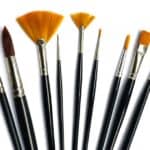
Sable, synthetic, goat, squirrel, sizes, shapes.
Paper
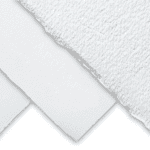
Hot Pressed, cold pressed, NOT, rough, paper weight, sizes, proportions. Learn about the different paper available. I’ll talk you through what I use and why but also explore other options you might want to try.
About your surface
The Paper I use and why
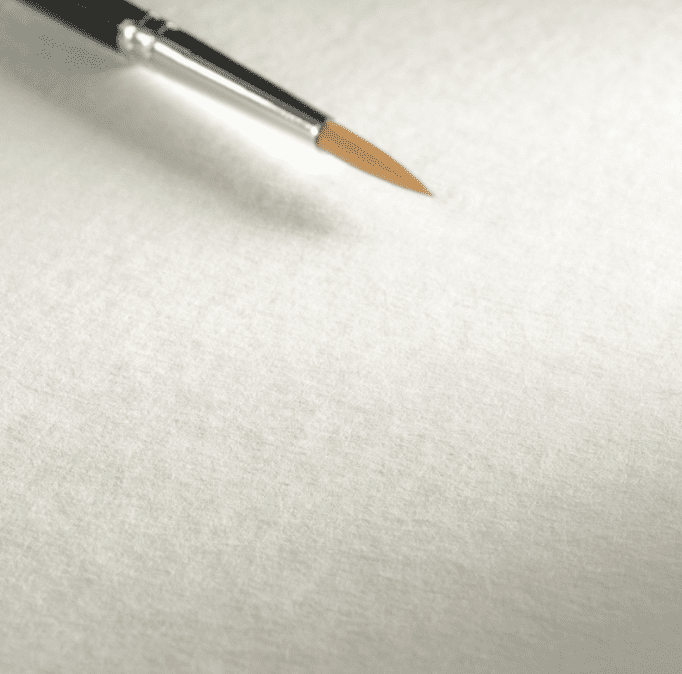
Using a heavy weight, high quality 100% cotton paper is essential to a pleasing end result. Paper that is lightweight will buckle or require stretching. Cheap watercolour paper has a very mechanical and repetitive surface texture whereas high quality paper has a much softer, more random and ultimately more pleasing surface. Of all the paper manufactures I have tried Hahnemuehle is the one I have settled on. The paper I will use throughout this course is their 425gsm Anniversary Edition. The paper I use for larger work is the 600gsm Leonardo in full imperial sheets.
Hahnemuehle Anniversary Edition
425 gsm – cold pressed
A high quality watercolour board with a matt surface structure in 425 gsm. This quality paper is acid-free, lightfast and extremely resistant to ageing and suitable for all wet painting techniques such as watercolour, gouache, tempera and acrylic.
Hahnemuehle Anniversary Edition
425 gsm – cold pressed
A high quality watercolour board with a matt surface structure in 425 gsm. This paper quality is acid-free, lightfast and extremely resistant to ageing and suitable for all wet painting techniques such as watercolour, gouache, tempera and acrylic.
Hahnemuehle Leonardo
600 gsm – cold pressed
Leonardo is natural white, acid free, lightfast and extremely resistant to ageing.
The heavy weight of this paper with its smooth, harmonious surface structure offers excellent flow of colour and ensures high brightness.
This heavyweight paper is excellent for all watercolour techniques especially wet-in-wet and glazing.
Available in 600gsm Hot Pressed, Cold Pressed (NOT) or Rough texture, 100% rag watercolour paper.
The rough is the roughest paper, NOT is a medium texture.

Hahnemuehle Leonardo
600 gsm – cold pressed
Leonardo is natural white, acid free, lightfast and extremely resistant to ageing.
The heavy weight of this paper with its smooth, harmonious surface structure offers excellent flow of colour and ensures high brightness.
This heavyweight paper is excellent for all watercolour techniques especially wet-in-wet and glazing.
Available in 600gsm Hot Pressed, Cold Pressed (NOT) or Rough texture, 100% rag watercolour paper.
The rough is the roughest paper, NOT is a medium texture.
the important bit
Paint
Use artists quality watercolour paints from Daniel Smith or Windsor and Newton and you won’t go wrong. Student quality paints (although the “Cottman” range from Windsor and Newton is very good) can be a false economy and don’t deliver the same results. Read the sections below for more details on WHY.
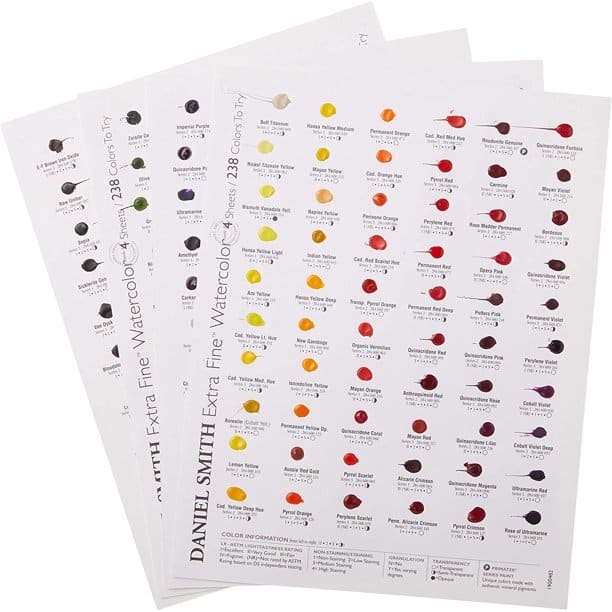
If you follow my tutorials in order then the first 4 paintings require.
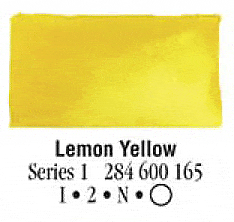
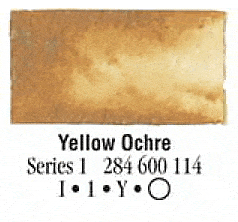
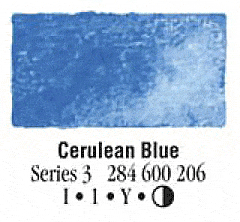
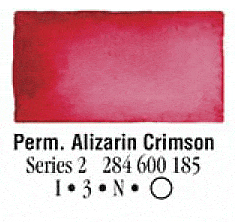
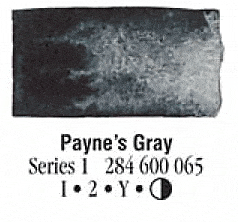
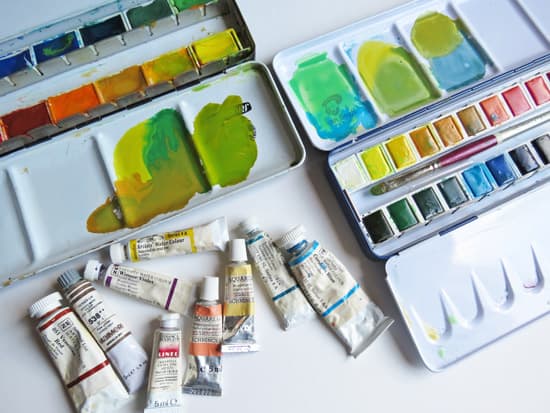

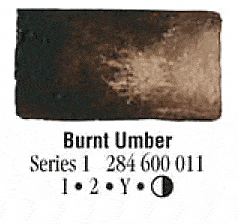
Cheap paint is cheap because it uses less and lower quality pigment and more binder. Less pigment means you need to use more, the definition of false economy. If I had to comprimise on any aspect of my materials paint would be the last. It’s the important bit. I recomend buying artist quality paints from Daniel Smith, Windsor and Newton or Shmincke. I like all of them but my preference would be Daniel Smith. I prefer the texture, it seems more creamy and the pigment doesnt seperate from the binder as easily as Windsor and Newton. I find the colours in Daniel Smith’s Range more vibrant than Shmincke and again I prefer the texture. I do still use both Windsor and Newton and Smincke simply because they last so long. I still have paints I used at college 20+ years ago.
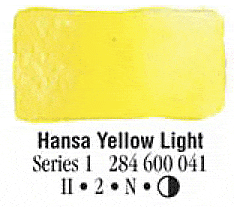
WARM PRIMARIES

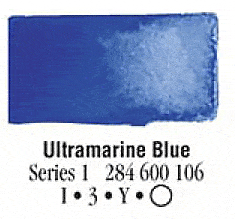
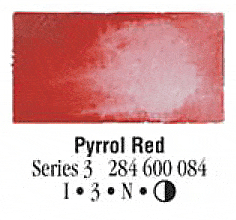
COOL PRIMARIES
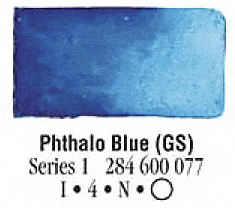
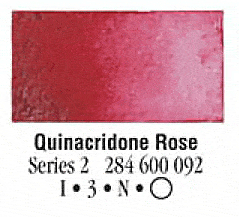
EARTH COLOURS

My selection of Sable brushes
Making your mark
Brushes
I prefer sable brushes over synthetic, they hold more paint, they last longer and generally they are made using higher quality processes and materials. Sable brushes are more expensive than synthetics and this is especially noticeable with larger brushes. Like synthetic brushes sable brushes come in a range of qualities and prices. BUy the best you can afford and start with 1 large size 14-20 round, a medium size 8-12 round, a small size 2-4 round and a size 4-6 rigger.
My selection of brushes (shown left, above on mobile) from top to bottom. Size 20 DaVinci Tobolski Kolinsky Series 10 Sable, Size 16 SAA Kolinsky Sable, Rembrant Size 10, 6, 4, 2 , 0. Size 4 Rigger.
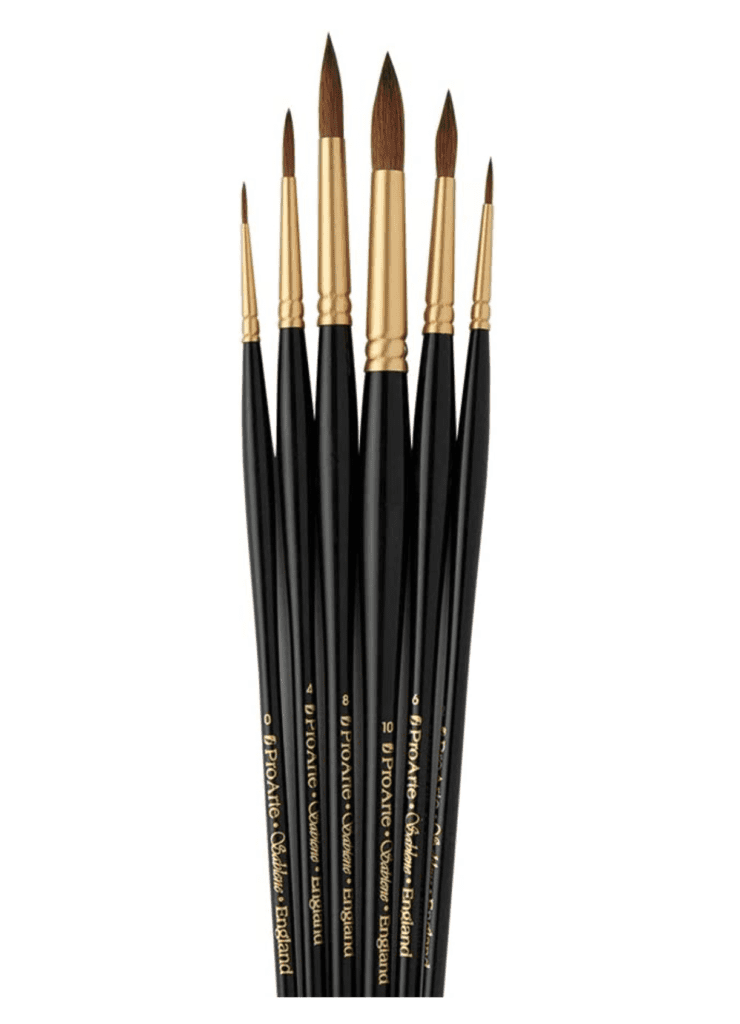
A good choice of “Synthetic Sable” brushes by ProArte
Where it all starts
Sketchbooks
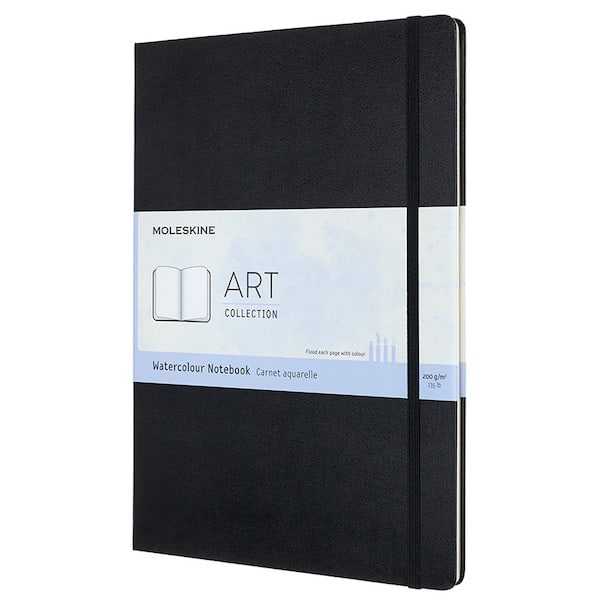
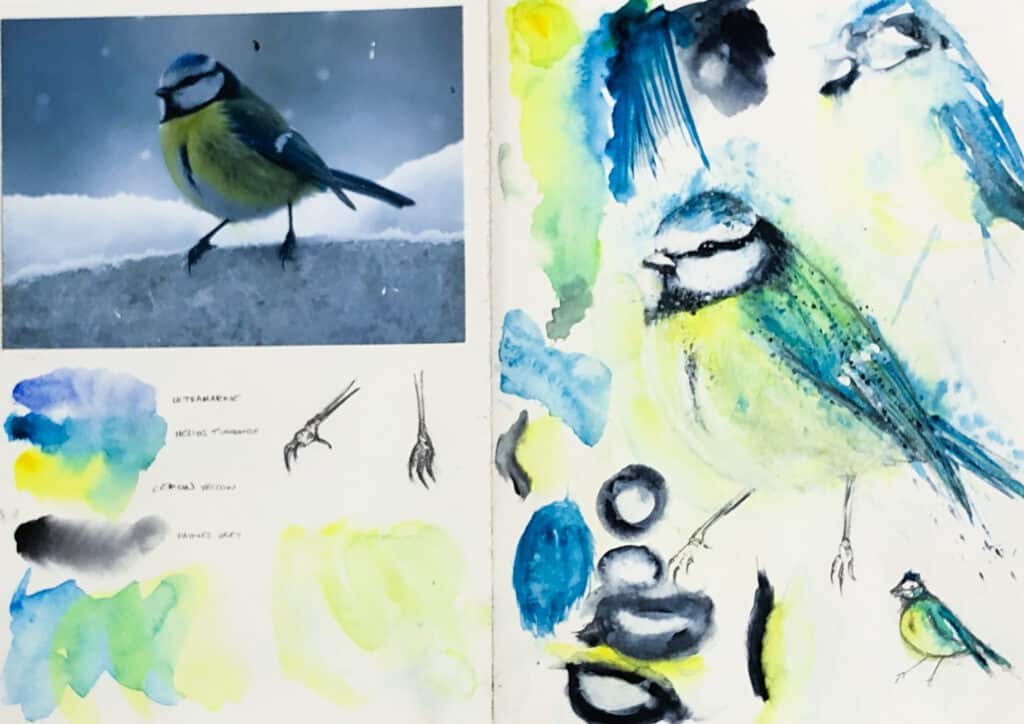
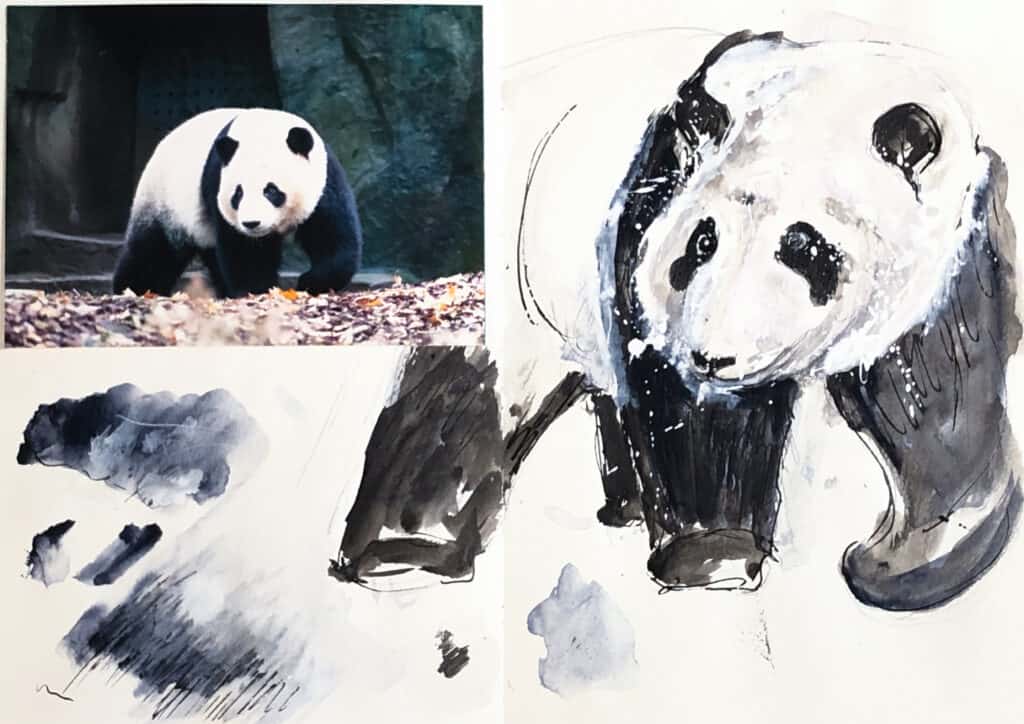
Moleskine Watercolour Notebooks are my choice. The paper is thick and strong and it contains 60 pages of plain, 200gsm ivory acid-free paper made from 25% cotton fibre, cold-pressed (slightly textured) on both sides of the sheet. Features an expandable inner pocket ideal for loose sketches source images and notes. The elastic also helps help the sketch book closed when not in use.

John Ruskin – 1856
the Fun Part
Shopping List
If you have nothing and want to start painting in watercolours here is a shopping list of things you will need. You DON’T need it all, I have tried to include budget friendly but good quality options as well as the professional grade equipment I use. Using slightly small paper than I do offers a significant saving. Windsor and Newton do a range of paints called “Cottman” which offer a very good price to quality balance.
Get 10% off your first order by using the link below and setting up an account with Jackson’s Art

A great ceramic pallet although I recommend the larger size and circular layout of the pallet to the right.
This is the pallet I use and recommend.
Low Tack Masking tape for taping your paper down
Shhh… White gouache used for highlights.
The essential starter colours I recommend.
I’ve been using Moleskine Sketchbooks, in all shapes and sizes for years.
Brush Cleaner and Conditioner
A set of student grade paint that gets you maximum bang for your buck. I would recommend that you spend a little more and get less colours. The Daniel Smith Essentials set is a much wiser buy in my opinion.
I use this as test paper, like loose sheets from a sketchbook.
Same great paper I use inthe tutorials jsut a smaller size. This size is much more budget friendly.
The paper and size I use in all the tutorials on the website
If you want to trace out the reference drawings on the site this will help a lot.
A fantastic budget friendly sable rigger brush. An essential brush that isn’t included in brush sets
I own and still use this set of brushes. I bought them in 2016 and they are still going strong.
If you dont want to use Sable Brushes this is a great starter set.
Cost conscious great quality large (size 16) synthetic brush
Top of the range starter set. I would add a Rigger Brush and 1 Large Brush ( Size-14-20 )
Top of the range mid sized (10) Sable Brush
Top of the range Rigger (or liner) Sable Brush – Size 4
Step by Step Video tutorials in Glorious 4K
Become a member
Choose your plan or try for free